Back from the Brink
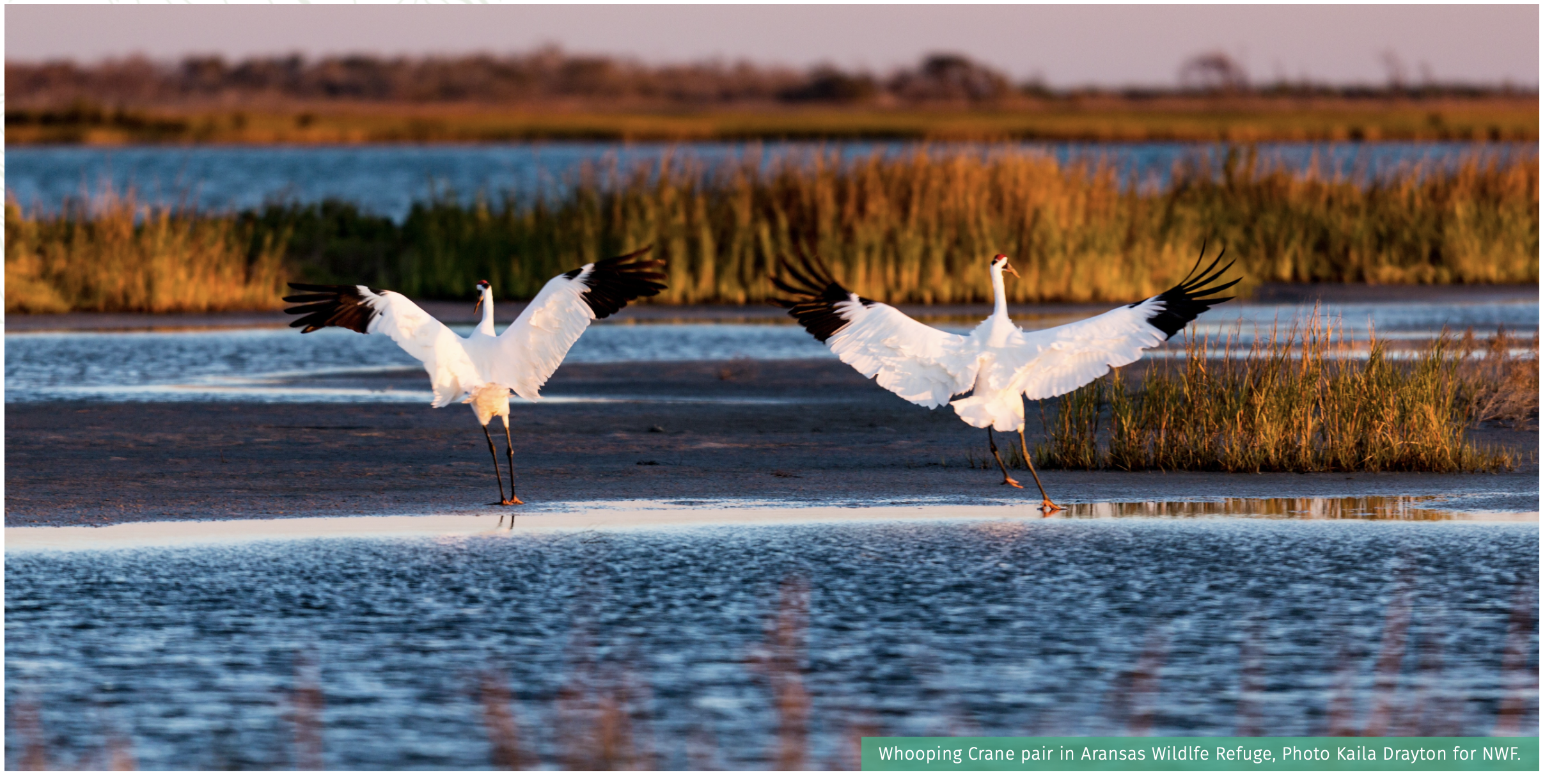
The comeback of the whooping crane is one of conservation’s most wonderful and endearing stories. Down to a startling 21 birds by the late 1940s, the population - both wild and captive - is now over 750. It was humans that caused the decline but it was also humans that managed through sheer persistence, creativity, and determination to bring back this majestic bird.
Whooping cranes are the tallest flying birds in North America. They stand almost 5 feet tall, have a wing span of over 7 feet and weigh about 13 - 16 pounds. They are wetland birds that winter in the southeastern U.S. and summer in the north. When alarmed, the whooping cranes cry out – a single note that travels across the grasslands and ponds and lingers in the air, alerting other cranes as far as two miles away. This tremendous noise is made possible by a trachea that is coiled like a French horn. If you were to stretch it out flat, it would measure more than five feet in length.
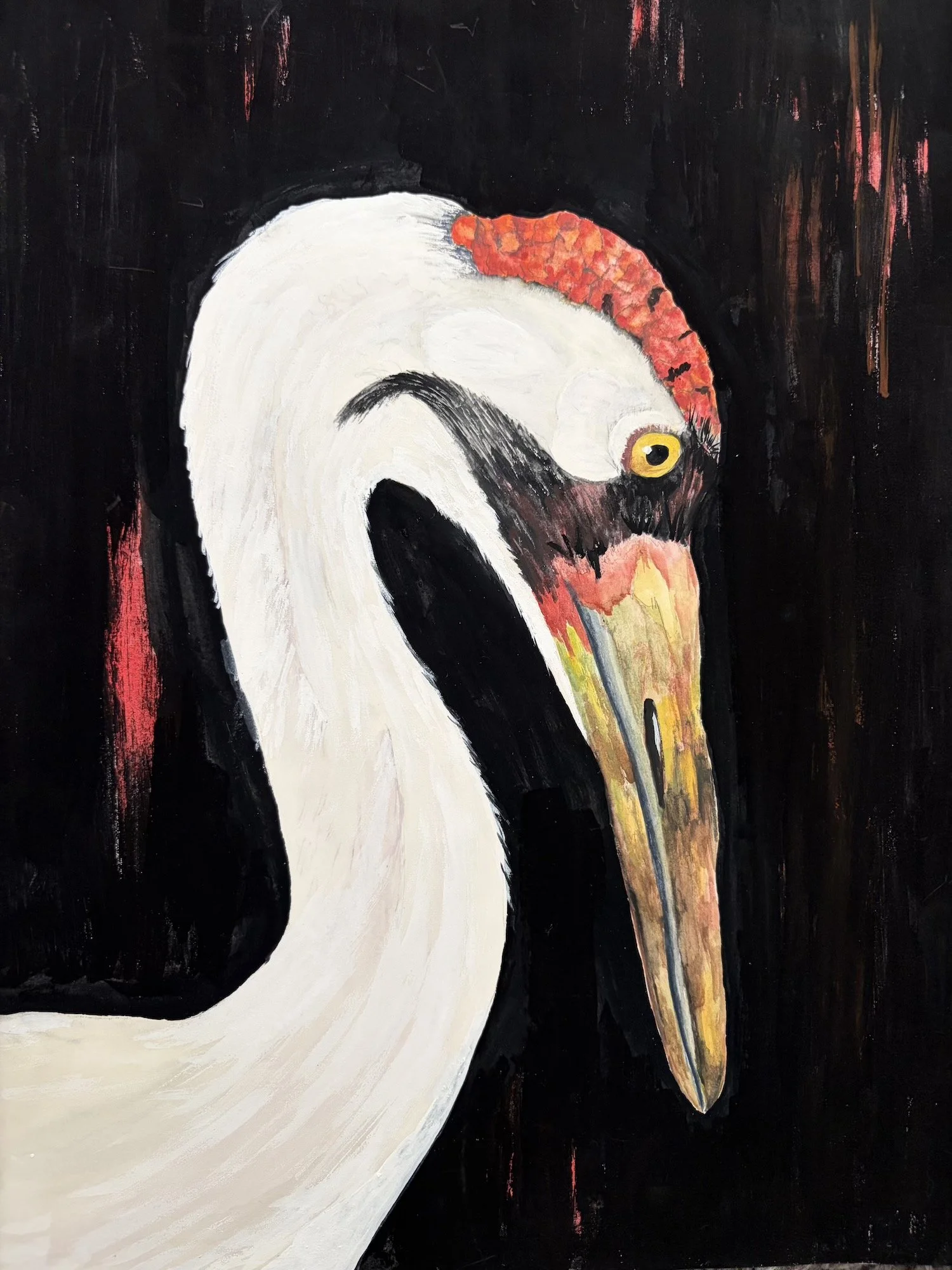
Much of the credit of saving these birds goes to Robert Porter Allen who was hired by the Audubon Society in the 1940s to track and study the whooping cranes. These birds migrate thousands of miles each year so Allen’s work took him from Texas to Alaska and western Canada and back for 39 months. It was arduous, he admits in his journals, but never dull.
By the 1960’s, scientists had learned a lot about these birds and were working diligently to preserve the species. Many birds were kept in captivity and the San Antonio Zoo was particularly passionate about this project . When a captive pair successfully produced a healthy chick called “Tex,” there was much celebration. Whooping crane chicks, like many other birds, will imprint on the first things they see after hatching. This was true of Tex who first saw humans and from that moment forward, thought she WAS human. At a time when scientists were desperate for cranes to breed in captivity, this aversion to her own species was devastating.
Tex finally ended up with Dr. George Archibald at the newly formed International Crane Foundation. As soon as she saw Dr. Archibald, Tex fell in love. In his dedication to the cause, Dr. Archibald learned the whooping crane mating dance and every morning he and Tex would walk together to an enclosure where they would both leap and swoop and throw sticks. His efforts were finally rewarded when Tex became sexually responsive and handlers were able to artificially inseminate her. The result of these heroic efforts was a healthy chick named “Gee Whiz,” which eventually became one of the most important breeders in the program.
The International Crane Foundation has a wonderful video of Dr. Archibald’s amazing work that you can see here. George and Tex.
Equally impressive is the story of how dedicated aviators helped the cranes learn to fly their long and complicated migration route. Historically, chicks learned the migration route from their parents but with the loss of the flock, there was also loss of the route. The solution was to find a new protected route from Wisconsin to Florida and to teach the chicks, using ultralight aircraft, how to fly it. The 1200 mile journey was done at an average pace of 35 miles per hour. Astoundingly, it worked and took only one flight for the birds to learn the route. In the spring, the birds were able to fly it on their own.
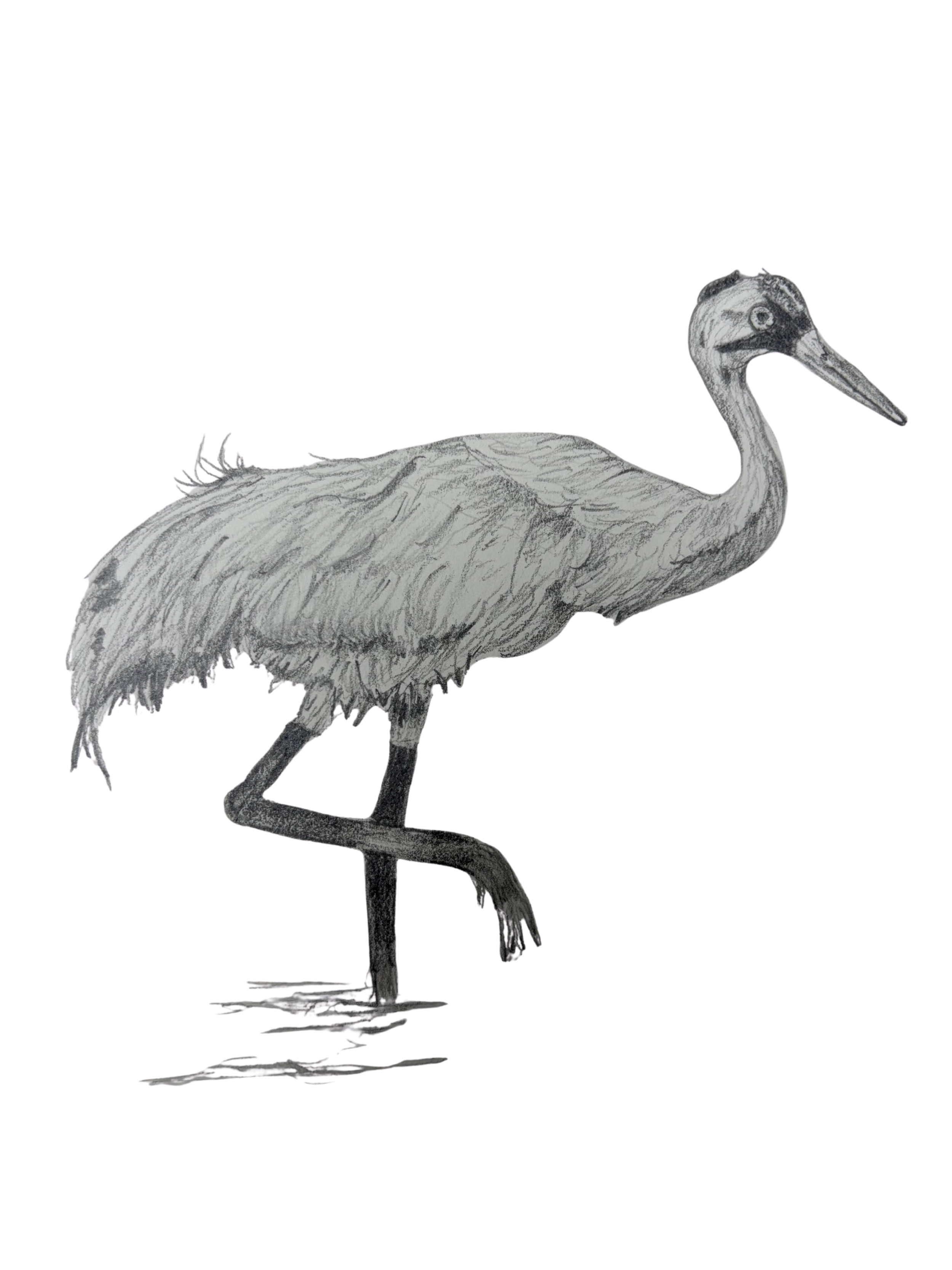
Robert Porter Allen wrote in his report of September 30, 1950, “When you sit crouched in a blind and watch an adult whooper stride close by you….you feel the presence of a strength and of a stubborn will to survive that is one of the vital intangibles of the entire situation. Certainly it cannot be overlooked. We have a strong conviction that the whooping crane will keep his part of the bargain and will fight for survival every inch of the way. What are we going to do to help? Here, in this report, is the challenge, here is the job that must be done.”
Allen’s words are particularly significant today as we face unprecedented environmental challenges. But, today, as then, determination, creativity, and persistence will bring results. The question remains, what are we going to do to help the wild things that share our planet? That is the challenge, that is the job that must be done.
A love affair with the wild South
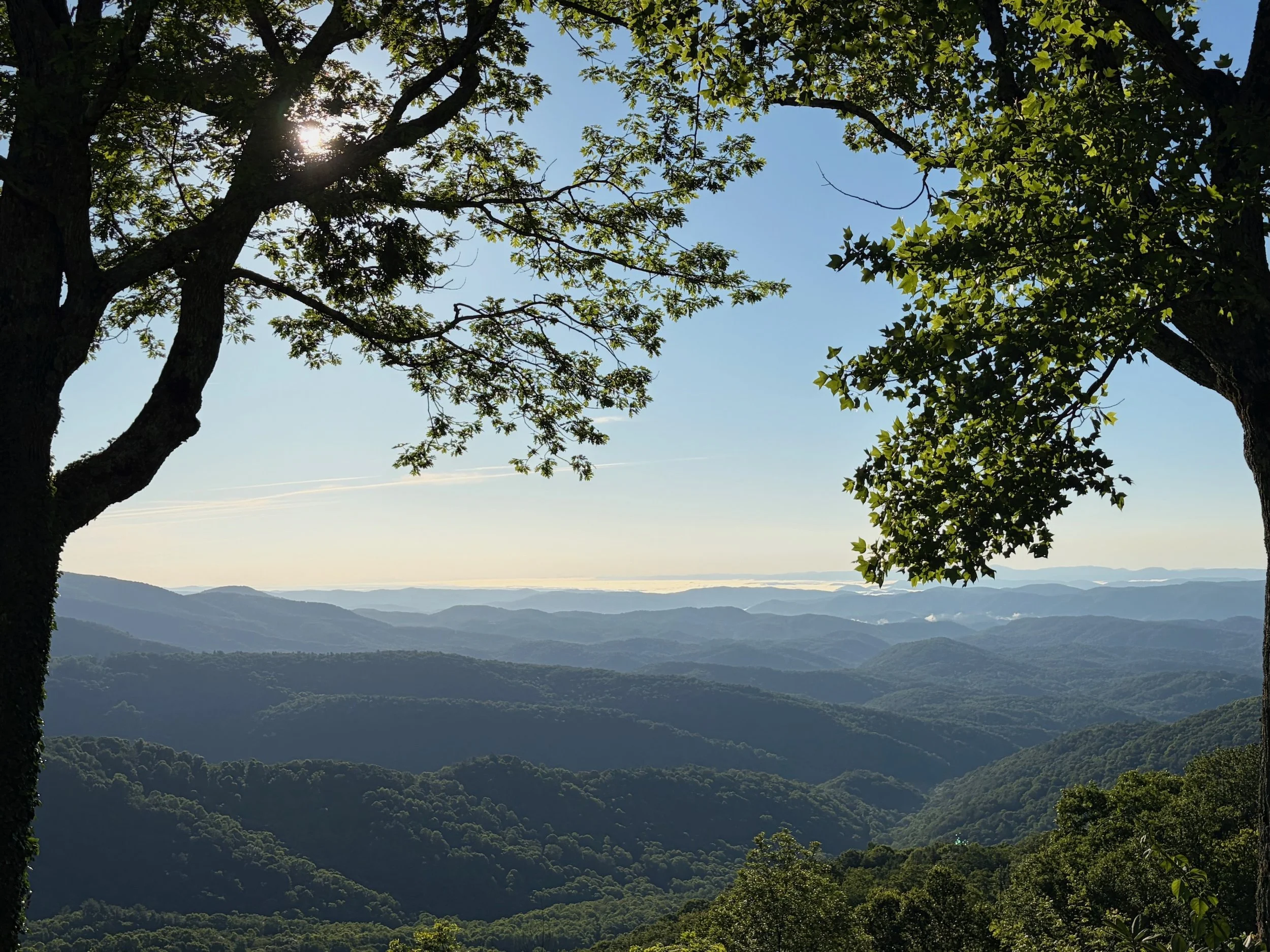
I have spent a lifetime falling in love with the wild South. I have camped in her mountains, swum in her oceans, walked her trails and slept under her stars.
I have spent a lifetime falling in love with the wild South. I have camped in her mountains, swum in her oceans, walked her trails and slept under her stars. I have studied her plants, listened to her birds, watched her wildlife, and still, I’m in awe of this majestic and richly diverse region.
The Southeastern United States is unlike anywhere else on Earth, and we are fortunate to still have many wild places that are home to an astonishing number of native species. But of course, wild habitats here, as throughout the world, are vanishing and our plants and animals along with them. The statistics are all too familiar, and doom and gloom hang like a heavy cloud over all those who love the Earth and her wild places.
When I determined to study and paint the most vulnerable of the native species of our region, those listed as endangered by the U.S. Fish and Wildlife Service, I braced myself for heartache. But instead, I found story after story of the powerful resilience of nature, and incredibly impressive tales of conservation.
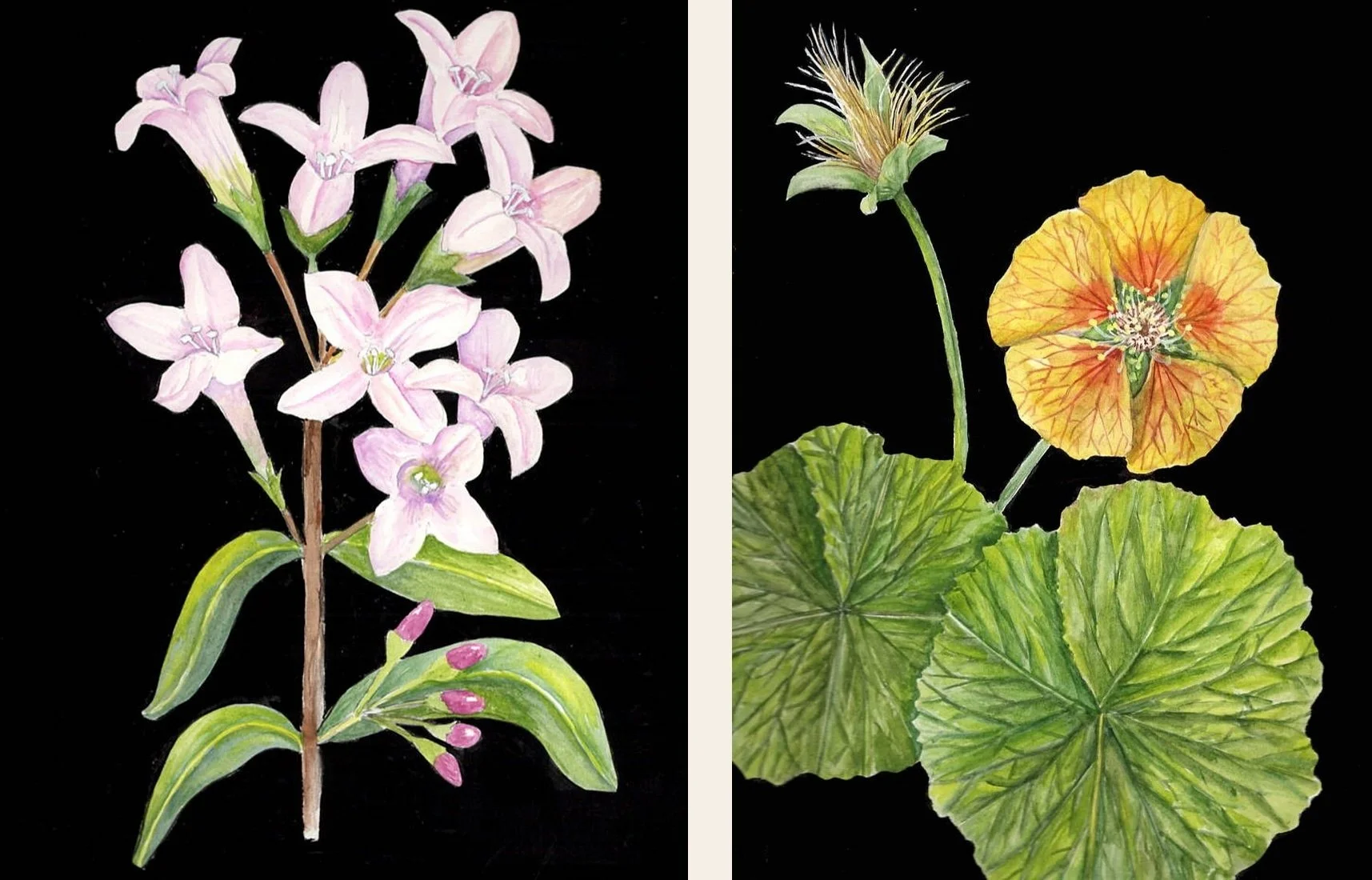
Roan Mountain bluet and spreading avens
And these are stories so good that I feel compelled to share them in any way I can. In addition to my book Endangered Plants of the Southeast: Stories of Persistence and Hope (due out April 2027), I will use this website to share my paintings and stories to provide brief glimpses into the lives and beauty of these plants and animals and the people who are using innovative and creative ways to save them.
A question is often asked about extinction: What kind of people are we to allow another species to disappear? But after spending the past several years immersed in these stories, I find myself asking a different question: What kind of people devote years of their lives, often for little money or recognition, to saving a tiny species that most of us will never see?
The people I have met and the stories I have heard have shown me that conservation can bring out the very best in humankind—curiosity, ingenuity, persistence, generosity and hope. I’d like to introduce you to some of those people and to the remarkable wild lives they are working to save.